Zoomer Roberts: vocal & harmonica
Buddy Winston: guitar
Recorded 7 August 2010
Tuesday, August 10, 2010
Monday, April 19, 2010
The County Line Band

Cindy Seaman: keyboards & vocal
Cindy Bickford: drums & vocal
Zoomer Roberts: bass & vocal
Al Couch: guitar
Hang On Sloopy
Lead vocal: Cindy Bickford
Should I Do It?
Lead vocal: Cindy Seaman
You're Not Mine Anymore
Lead vocal: Zoomer Roberts
Recorded 18 June 1983 at the Anthony Gap Saloon
Basically, this was Cliff Seaman's old band, with me taking over Cliff's bass duties and Al Couch filling the lead guitar slot I had once occupied. Cindy Seaman, who had become a fine and savvy musician, lead and fronted the group. We were propelled by the formidable drumming of Cindy Bickford. Everyone sang. Musically, it bore no resemblance to the earlier group. It was exciting and punchy and filled with harmony and should have gone places. Actually, it did: we played two weeks in San Angelo (see photo). Due to circumstances beyond our control, the group broke up after only two months. This slightly distorted cassette is all that remains.

Sunday, March 28, 2010
Utah Street
Zoomer Roberts: vocal & harmonica
Buddy Winston: guitar
recorded 27 March 2010
Another original. Utah Street was home to El Paso's red light district in the horse and buggy era. Sam Jones is fictional. Zachary White was real. Tillie was a prominent madame. Utah Street is now Mesa Street.
Buddy Winston: guitar
recorded 27 March 2010
Another original. Utah Street was home to El Paso's red light district in the horse and buggy era. Sam Jones is fictional. Zachary White was real. Tillie was a prominent madame. Utah Street is now Mesa Street.
Sunday, December 27, 2009
On the Side of This Mountain #3
Zoomer Roberts: vocal
Buddy Winston: guitar & harmony vocal
recorded 27 March 2010
This original song about living and dying in El Paso has been kicking around for a couple of years. The bridge has been altered from the previous (and now deleted) version. Some of the lyrics are symbolic. Others are literal. Long-time El Pasoans will recognize many of the references. I do indeed live on the western slopes of the Franklin Mountains and intend to stay put. The rest of the world passes through in a ceaseless parade of numbness, on its way to God-knows-where.
LYRICS:
On the side of this mountain it's always I've been
I'll watch you go out like I watched you come in
And when you are leavin' it's goodbye old friend
On the side of this mountain I'll stay 'til the end.
On the side of this mountain I'll stand like a tree
In a tiny oasis that no one but me
Can look at and tell if it's Heaven or Hell
On the side of this mountain I'll drink from the well
Each day the sun sets just a little bit later
And the big orange moon rises o'er the equator
Displaying its ridges, its rocks and its craters
And shines on the places where young escapaders
Were served Chico's Tacos by Mexican waiters
Drank cheap bourbon whiskey at drive-in theatres
And went to the Plaza to torment the gators
Recuérdame mi corazón
From the side of this mountain I can see through the years
And measure my days by the laughter and tears
For I have been with you and I've been without
On the side of this mountain I'll stand and I'll shout
And then some glad morning my ashes will blow
Up the Carlsbad Highway to New Mexico
Where the gypsum is glistening and the desert winds blow
Where the wispy wildflowers and the tumbleweeds grow
By the banks of the old Rio Grande that flows
Where the snowy Sandias kiss the valley below
Like the morning dew kisses the bloom of the rose
Espérame mi carazón
On the side of this mountain I'll stay until then
'Til the Lord at long last bids my soul to ascend
'Til the years melt away and the ages roll by
On the side of this mountain I'll live 'til I die.
© Zoomer Roberts
Buddy Winston: guitar & harmony vocal
recorded 27 March 2010
This original song about living and dying in El Paso has been kicking around for a couple of years. The bridge has been altered from the previous (and now deleted) version. Some of the lyrics are symbolic. Others are literal. Long-time El Pasoans will recognize many of the references. I do indeed live on the western slopes of the Franklin Mountains and intend to stay put. The rest of the world passes through in a ceaseless parade of numbness, on its way to God-knows-where.
LYRICS:
On the side of this mountain it's always I've been
I'll watch you go out like I watched you come in
And when you are leavin' it's goodbye old friend
On the side of this mountain I'll stay 'til the end.
On the side of this mountain I'll stand like a tree
In a tiny oasis that no one but me
Can look at and tell if it's Heaven or Hell
On the side of this mountain I'll drink from the well
Each day the sun sets just a little bit later
And the big orange moon rises o'er the equator
Displaying its ridges, its rocks and its craters
And shines on the places where young escapaders
Were served Chico's Tacos by Mexican waiters
Drank cheap bourbon whiskey at drive-in theatres
And went to the Plaza to torment the gators
Recuérdame mi corazón
From the side of this mountain I can see through the years
And measure my days by the laughter and tears
For I have been with you and I've been without
On the side of this mountain I'll stand and I'll shout
And then some glad morning my ashes will blow
Up the Carlsbad Highway to New Mexico
Where the gypsum is glistening and the desert winds blow
Where the wispy wildflowers and the tumbleweeds grow
By the banks of the old Rio Grande that flows
Where the snowy Sandias kiss the valley below
Like the morning dew kisses the bloom of the rose
Espérame mi carazón
On the side of this mountain I'll stay until then
'Til the Lord at long last bids my soul to ascend
'Til the years melt away and the ages roll by
On the side of this mountain I'll live 'til I die.
© Zoomer Roberts
Sunday, August 9, 2009
Walkin' Down the Railroad Line
from KTEP radio broadcast of 14 July 2007
Zoomer Roberts: vocal & Harmonica
Buddy Winston: guitar
Bob Burns & Gene Keller: banjo, guitar, vocals
This is from a KTEP broadcast commemorating what would have been Woody Guthrie's 95th birthday. It was a loose affair, with everybody playing on everyone else's songs. I particularly enjoyed doing this obscure ditty from Woody's 1940 Library of Congress recordings. Its construction is ideal for a hootenanny, which this certainly was.
Zoomer Roberts: vocal & Harmonica
Buddy Winston: guitar
Bob Burns & Gene Keller: banjo, guitar, vocals
This is from a KTEP broadcast commemorating what would have been Woody Guthrie's 95th birthday. It was a loose affair, with everybody playing on everyone else's songs. I particularly enjoyed doing this obscure ditty from Woody's 1940 Library of Congress recordings. Its construction is ideal for a hootenanny, which this certainly was.
Hard, Ain't It Hard
from KTEP radio broadcast of 14 July 2007
Zoomer Roberts: vocal & Harmonica
Buddy Winston: guitar
Bob Burns & Gene Keller: banjo, guitar, vocals
Zoomer Roberts: vocal & Harmonica
Buddy Winston: guitar
Bob Burns & Gene Keller: banjo, guitar, vocals
The Sinking of the Reuben James
from KTEP radio broadcast of 14 July 2007
Zoomer Roberts: vocal & Harmonica
Buddy Winston: guitar
Bob Burns & Gene Keller: banjo, guitar, vocals
Zoomer Roberts: vocal & Harmonica
Buddy Winston: guitar
Bob Burns & Gene Keller: banjo, guitar, vocals
Tom Joad
from KTEP radio broadcast of 14 July 2007
Zoomer Roberts: vocal & Harmonica
Buddy Winston: guitar
Bob Burns & Gene Keller: banjo, guitar, vocals
Zoomer Roberts: vocal & Harmonica
Buddy Winston: guitar
Bob Burns & Gene Keller: banjo, guitar, vocals

Thursday, April 30, 2009
Cimarron
Jerry, Buddy & Zoomer
Jerry Boyer: vocal
Buddy Winston: vocal & guitar
Zoomer Roberts: vocal & guitar
recorded March 1983
We learned this song from an old Johnny Bond 78 that I found on one of my junkin' junkets. In today's world of torrents, eBay and Bear Family box sets, the idea of spending hours sifting through stacks of old records in search of a gem seems plumb rustic, but 25 years ago it was the only way to find songs like this. Like many cowboy songs of the '30s and '40s, it doesn't tell a story. Rather, it conveys the resignation of being in motion for its own sake. Maybe things will get better. Maybe not. Roll on!
Jerry Boyer: vocal
Buddy Winston: vocal & guitar
Zoomer Roberts: vocal & guitar
recorded March 1983
We learned this song from an old Johnny Bond 78 that I found on one of my junkin' junkets. In today's world of torrents, eBay and Bear Family box sets, the idea of spending hours sifting through stacks of old records in search of a gem seems plumb rustic, but 25 years ago it was the only way to find songs like this. Like many cowboy songs of the '30s and '40s, it doesn't tell a story. Rather, it conveys the resignation of being in motion for its own sake. Maybe things will get better. Maybe not. Roll on!
The Face On the Barroom Floor

Jerry, Buddy & Zoomer
Zoomer Roberts: recitation
Jerry Boyer: wordless vocal
Buddy Winston: guitar
recorded March 1983
This Hugh Antoine d'Arcy poem -- also known as "The Face Upon the Floor" -- first saw the light of day in 1887. It was the inspiration for a 1914 Charlie Chaplin film (above) and a 1954 Mad Magazine parody (below). Our version came from Hank Snow's "Tales of the Yukon" LP. It might be considered melodramatic, but I've always found it compelling, and the challenge of performing it as a serious piece was irresistable. This performance is from a rehearsal tape for a concert we did at the El Paso Unitarian Community in 1983. Here is the original text, in case you'd like to follow along:
'Twas a balmy summer evening, and a goodly crowd was there.
Which well-nigh filled Joe's barroom on the corner of the square,
And as songs and witty stories came through the open door
A vagabond crept slowly in and posed upon the floor.
"Where did it come from?" Someone said: "The wind has blown it in."
"What does it want?" Another cried. "Some whisky, rum, or gin?"
"Here, Toby, seek him, if your stomach's equal to the work --
I wouldn't touch him with a fork, he's as filthy as a Turk."
This badinage the poor wretch took with stoical good grace;
In fact, he smiled as though he thought he'd struck the proper place.
"Come, boys, I know there's kindly hearts among so good a crowd --
To be in such good company would make a deacon proud."
"Give me a drink -- that's what I want -- I'm out of funds, you know;
When I had cash to treat the gang, this hand was never slow.
What? You laugh as though you thought this pocket never held a sou;
I once was fixed (as well), my boys, as anyone of you."
"There, thanks; that's braced me nicely; God bless you one and all;
Next time I pass this good saloon, I'll make another call.
Give you a song? No, I can't do that, my singing days are past;
My voice is cracked, my throat's worn out, and my lungs are going fast."
"Say! Give me another whisky, and I'll tell you what I'll do --
I'll tell you a funny story, and a fact, I promise, too.
That I was ever a decent man not one of you would think;
But I was, some four or five years back. Say, give me another drink."
"Fill her up, Joe, I want to put some life into my frame --
Such little drinks, to a bum like me, are miserably tame;
Five fingers -- there, that's the scheme -- and corking whisky, too.
Well, here's luck, boys; and landlord, my best regards to you."
"You've treated me pretty kindly, and I'd like to tell you how
I came to be the dirty sot you see before you now.
As I told you, once I was a man, with muscle, frame and health,
And but for a blunder, ought to have made considerable wealth."
"I was a painter -- not one that daubed on bricks and wood
But an artist, and, for my age, was rated pretty good.
I worked hard at my canvas and was bidding fair to rise,
For gradually I saw the star of fame before my eyes."
"I made a picture, perhaps you've seen, 'tis called the 'Chase of Fame,'
It brought me fifteen hundred pounds and added to my name.
And then I met a woman -- now comes the funny part --
With eyes that petrified my brain, and sunk into my heart."
"Why don't you laugh? 'Tis funny that the vagabond you see
Could ever love a woman and expect her love for me;
But 'twas so, and for a month or two her smiles were freely given,
And when her loving lips touched mine it carried me to heaven."
"Did you ever see a woman for whom your soul you'd give,
With a form like the Milo Venus, too beautiful to live;
With eyes that would beat the Koh-i-noor, and a wealth of chestnut hair?
If so, 'twas she, for there never was another half so fair."
"I was working on a portrait, one afternoon in May,
Of a fair-haired boy, a friend of mine, who lived across the way,
And Madeline admired it, and, much to my surprise,
Said that she'd like to know the man that had such dreamy eyes."
"It didn't take long to know him, and before the month had flown
My friend had stolen my darling, and I was left alone;
And, ere a year of misery had passed above my head,
The jewel I had treasured so had tarnished, and was dead."
"That's why I took to drink, boys. Why, I never saw you smile,
I thought you'd be amused, and laughing all the while.
Why, what's the matter, friend? There's a teardrop in your eye,
Come, laugh, like me; 'tis only babes and women that should cry."
"Say, boys, if you give me just another whisky, I'll be glad,
And I'll draw right here a picture of the face that drove me mad.
Give me that piece of chalk with which you mark the baseball score --
You shall see the lovely Madeline upon the barroom floor."
Another drink, and with chalk in hand the vagabond began
To sketch a face that well might buy the soul of any man.
Then, as he placed another lock upon the shapely head,
With a fearful shriek, he leaped and fell across the picture -- dead.

Monday, April 13, 2009
Rod Crosby Salutes Buddy Holly
Rod Crosby: guitar & vocal
Listen to Rod sing "Peggy Sue"
Rod Crosby here. I'm the guy you hear playing and singing this Buddy Holly song. In the early morning of February 3rd, 1959, my biggest musical influence, Buddy Holly, died tragically in a single engine aircraft crash near Mason City, Iowa with three other men -- Ritchie Valens, The Big Bopper, and the pilot. Holly's influence is still in motion, carried, and perpetuated by, the likes of guys like me, and all his countless fans, whether they be audience-fans or musician-fans, world famous or local. His birth, life, and death events are continually celebrated all over the world.
My friend and well-known fellow musician here in El Paso, the much loved, multi-talented, and delightfully "Zany" Zoomer Roberts, came up with the idea to pay tribute to Buddy on, or around, Buddy's 50th deathday in February 2009. He approached radio host Gregg Carthy of the "Folk Fury" program that airs every Saturday 7-10PM on UTEP's FM station, KTEP, with this idea of having a few select musicians play and sing Holly songs live, on air, acoustically, also referred to as "unplugged", or "folk style", which means little or no electronics involved.
Zoomer was kind enough to say that I, Rod Crosby, just had to be included as one of the players, which was most flattering, and taken as a great compliment. Thank you, Zoomer!
In the early days of El Paso's 60's rock scene, "The Fanatics", which was Bobby & Randall Fuller, Larry Thompson and Billy Webb, were in the center of it, playing a lot of Holly's music, and originals. The band I was in, known only then as "The Intruders" (without Rod Crosby at the front of the name) played Holly music as 60% of the band's song list. Reason for that, I was the lead singer and had, early on, learned to play and sing every song on the "Buddy Holly & The Crickets" album, and later, many more selected from other albums.
Oh, on a side-note, Holly was also Bobby Fuller's greatest influence, even above his heroes, Gene Vincent and Eddie Cochran. Fuller even mentioned in an interview here in El Paso in the early 60's that he and I had in common, and shared, Holly's influence. The fact that "I Fought The Law", the Bobby Fuller Four's iconic rock song, was written by Holly Cricket-guitarist Sonny Curtis is just more evidence of the connection of the dots, or stars, from local rock music all the way to the Holly sound.
Anyway, the date for this live on-air tribute was set for Saturday February 28th, 2009. When asked by Gregg to be on the show and perform (4) Holly songs, I accepted gladly, but with reservation, due to the nature of my self-employment as owner of my own business, Crosby Sound-Lighting-Video-Backline Services. My company provides all types of audio and video production for live concerts, and various events, on the weekends. I told Gregg the odds of my being off that evening were slim to none, as I had contracts pending on the table at that time, so figured it would not happen for me. I was disappointed, to say the least, and told Gregg I guess the right thing to do would be to pass and let someone else have that slot, since I couldn't make a firm commitment.
On that note, Gregg was nice enough to suggest that if necessary, he could record an interview with me at my own studio prior to the show, on condition that the (4) songs be performed, and recorded, with the set up of one mic, playing the guitar and singing simultaneously, all the way through each song, as it would be if it were being done live in the KTEP studio. So, that is exactly what we did.
As it turned out, I ended up being committed elsewhere on that date, but the interview did air on the 28th after Zoomer and the other musicians performed. Thank you, Gregg, and Zoomer, again, for making that happen for me, so I could participate with you all in honoring my hero, Buddy Holly.
I just want to say here how very much I appreciate the allowance of me to do that, and for the exception made. It was not asked for, expected, or taken for granted. Couldn't stand to have missed out on all of that event. I do regret I was unable to be there in person, but believe me, I was there in spirit.
I must add here that I began with guitar in 1955, as a kid in Corona, California, on a 1941 Rickenbacker double-neck 6-string "steel" guitar, then moved on to an acoustic guitar which was back then, and still is, my primary instrument. To be able to perform Holly's songs so simplistically, and for it to be shared on the air, was a real honor and a privilege.
So, reason for all this rhetoric, is just to explain to listeners the importance and influence of Buddy Holly right here in El Paso, why this song and (3) others were recorded in the first place, and also, in the manner which that was done. Helping with the recording of parts of the interview in my studio was visiting, and former, El Paso rock musician Todd Rubenstein, now a Grammy nominated producer and owner-manager of TMR Productions based out of Nashville. The mic used was a ribbon condensor, and the guitar played was my black, jumbo Taylor Tribute 515B (owned formerly by El Paso musician-vocalist Tana Ladner) with just recently installed "Barry Martin's Famous" jumbo frets. What a guitar! I don't play it, it plays me!
Hope you enjoy the songs and relate to the powerful connection of the many people right here in El Paso and the late, great Buddy Holly!
Thanks for listening,
Rod Crosby
Listen to Rod sing "It Doesn't Matter Anymore"
Love this song. Played this song a lot in my earlier band days when I realized I had to give up my first true-teen love interest, the beautiful dark-eyed Anita Marie Moskal. It was pretty much like the song, close enough to realize that we would have to go our own ways, because we were just too young. However, that time we had was great, full of teenage angst, and discovery of all kinds, and they can never take that away from us.
This song was written by Paul Anka way back in his youth, before he ever became fore-front famous, and Buddy recorded it first. Paul is still performing and composing, going strong as ever.
Listen to Rod sing "Well... All Right"
This is one of my all-time favorite Buddy Holly songs. The way the acoustic guitar rings out at the higher fret position is a stand-out from all of Holly's songs, and even more so, the way it was played by Holly, an influence of the highest magnitude.
Probably the first famous early Rock 'n' Roller to use a capo on a guitar, as noted by John Lennon in an interview about how much Holly influenced the Beatles. John also mentioned it was now cool to be seen on stage wearing "spectacles". John is quoted as saying "I WAS Buddy Holly!"
This song also strongly reflected the strenth of a teenage romance, pushing on, against all odds, forever how long it could last. This song also has special meaning because again, it epitomized the intent, and the eventual end of my first true teen-love interest.
Listen to Rod sing "Not Fade Away"
I especially like this song. Created by Holly in the "Bo Diddley" vein. Really powerful song, and fun to play live with a real band. Also one of Bobby Fuller's favorites.
Sunday, March 1, 2009
Midnight Shift
from the KTEP Folk Fury broadcast of 28 Feb. 2009
Zoomer Roberts: vocal and harmonica
Buddy Winston: guitar
Doug Neal: bass
Zoomer here. I usually include some lesser-known items in tribute shows. This is one of the songs Buddy Holly recorded in Nashville for Decca in 1956. It was also done by Commander Cody and His Lost Planet Airmen in the early 1970s. It's not a great song, but it's fun. Originally, the line "brother, there just ain't no ifs" appeared in three consecutive verses, and I thought once was plenty, so I did a minor re-write wherein Annie drives your car off of a cliff and reeks of liquor and illicit sex the next morning. Another line -- "when you're at the morgue identifyin' the stiff / you'll know that Annie was a-workin' on the midnight shift" -- was left on the cutting room floor.
Zoomer Roberts: vocal and harmonica
Buddy Winston: guitar
Doug Neal: bass
Zoomer here. I usually include some lesser-known items in tribute shows. This is one of the songs Buddy Holly recorded in Nashville for Decca in 1956. It was also done by Commander Cody and His Lost Planet Airmen in the early 1970s. It's not a great song, but it's fun. Originally, the line "brother, there just ain't no ifs" appeared in three consecutive verses, and I thought once was plenty, so I did a minor re-write wherein Annie drives your car off of a cliff and reeks of liquor and illicit sex the next morning. Another line -- "when you're at the morgue identifyin' the stiff / you'll know that Annie was a-workin' on the midnight shift" -- was left on the cutting room floor.
Everyday
from the KTEP Folk Fury broadcast of 28 Feb. 2009
Zoomer Roberts: vocal and harmonica
Buddy Winston: guitar
Doug Neal: bass
This should've been titled "Every Day." I just want you to know that I know that. Typically, we didn't try to sound like the record, but we held on to the wonderful bridge, each chord a fourth above the previous one, and the penultimate chord a semitone above the dominant. The same progression played backwards is the basis for "Hey Joe" by the Leaves and/or Jimi Hendrix.
Zoomer Roberts: vocal and harmonica
Buddy Winston: guitar
Doug Neal: bass
This should've been titled "Every Day." I just want you to know that I know that. Typically, we didn't try to sound like the record, but we held on to the wonderful bridge, each chord a fourth above the previous one, and the penultimate chord a semitone above the dominant. The same progression played backwards is the basis for "Hey Joe" by the Leaves and/or Jimi Hendrix.
Peggy Sue Got Married
from the KTEP Folk Fury broadcast of 28 Feb. 2009
Zoomer Roberts: vocal and harmonica
Buddy Winston: guitar
Doug Neal: bass
Before embarking on what would be his last tour, Buddy recorded some voice-and-guitar demos of his latest compositions, including this sequel to "Peggy Sue." Coral records overdubbed additional accompaniment and issued the songs scant months after his death. Later on, Holly's one-time producer, Norman Petty, re-dubbed the tapes -- this time with the Fireballs providing the backing. Still later, the Hollies produced their own hybrid version of this song, while Buddy's original recording surfaced in a movie of the same name.
Lyrically, not much is going on here -- but it must be remembered that it was written by a young man for an even younger audience. It's doubtful that Buddy envisioned this song being sung by old people half a century after the fact!
Zoomer Roberts: vocal and harmonica
Buddy Winston: guitar
Doug Neal: bass
Before embarking on what would be his last tour, Buddy recorded some voice-and-guitar demos of his latest compositions, including this sequel to "Peggy Sue." Coral records overdubbed additional accompaniment and issued the songs scant months after his death. Later on, Holly's one-time producer, Norman Petty, re-dubbed the tapes -- this time with the Fireballs providing the backing. Still later, the Hollies produced their own hybrid version of this song, while Buddy's original recording surfaced in a movie of the same name.
Lyrically, not much is going on here -- but it must be remembered that it was written by a young man for an even younger audience. It's doubtful that Buddy envisioned this song being sung by old people half a century after the fact!
Bluebirds Over the Mountain
from the KTEP Folk Fury broadcast of 28 Feb. 2009
Zoomer Roberts: vocal and harmonica
Buddy Winston: guitar
Doug Neal: bass
For whatever reason, I heard the Beach Boys' version of this song before I heard Ersel Hickey's original or Ritchie Valens' cover version. Melodically, it's quite catchy, so we slowed it down a little, added a couple of chords, and played up its strengths. The recurring "bluebirds over the mountain / seagulls over the sea" paints a lovely picture. Feel the sea breeze on your face while you nurse your broken teenage heart! Valens -- dead at age 17 -- never got too old to sing this.
Zoomer Roberts: vocal and harmonica
Buddy Winston: guitar
Doug Neal: bass
For whatever reason, I heard the Beach Boys' version of this song before I heard Ersel Hickey's original or Ritchie Valens' cover version. Melodically, it's quite catchy, so we slowed it down a little, added a couple of chords, and played up its strengths. The recurring "bluebirds over the mountain / seagulls over the sea" paints a lovely picture. Feel the sea breeze on your face while you nurse your broken teenage heart! Valens -- dead at age 17 -- never got too old to sing this.
The Preacher and the Bear
from the KTEP Folk Fury broadcast of 28 Feb. 2009
Zoomer Roberts: vocal
Buddy Winston: guitar
Doug Neal: bass
Although The Big Bopper wrote several successful songs, he got this one from Phil Harris, who salvaged it from traditional sources. It was a good vehicle for the Bopper's manic delivery. We patterned our version after that of Jerry Reed, who was also manic, but more accessibly so. There are a number of old songs about preachers hunting on the Lord's Day, and this one contains elements of "signifyin' " which is widespread in the African-American oral tradition and probably a precursor of rap. In my case, country + rap = crap, but it was fun!
Zoomer Roberts: vocal
Buddy Winston: guitar
Doug Neal: bass
Although The Big Bopper wrote several successful songs, he got this one from Phil Harris, who salvaged it from traditional sources. It was a good vehicle for the Bopper's manic delivery. We patterned our version after that of Jerry Reed, who was also manic, but more accessibly so. There are a number of old songs about preachers hunting on the Lord's Day, and this one contains elements of "signifyin' " which is widespread in the African-American oral tradition and probably a precursor of rap. In my case, country + rap = crap, but it was fun!
Monday, November 24, 2008
I Fought the Law
Performed by Avalanche
Zoomer Roberts: vocal & lead guitar
Wynn Pinkham: pedal steel guitar
Mike Bennett: bass
Bill Wilson: drums
Beverly Roberts: harmony vocal
recorded 9 December 1978
Whiskey River East, Horizon City, Texas
I had second thoughts about posting this beer-soaked track, which teeters precariously on the brink of bar band bedlam, but drummer Bill Wilson died last night, and when one of us dies, it redefines everything for those who are left behind. This recording has, to me, become as beautiful as burnished bronze -- a portrait of a time, and a place, and an aggregation that are no more. A moment frozen in amber. The drummer throws his sticks into the air, and there they remain suspended forever, never to return to their owner's hands...
Zoomer Roberts: vocal & lead guitar
Wynn Pinkham: pedal steel guitar
Mike Bennett: bass
Bill Wilson: drums
Beverly Roberts: harmony vocal
recorded 9 December 1978
Whiskey River East, Horizon City, Texas
I had second thoughts about posting this beer-soaked track, which teeters precariously on the brink of bar band bedlam, but drummer Bill Wilson died last night, and when one of us dies, it redefines everything for those who are left behind. This recording has, to me, become as beautiful as burnished bronze -- a portrait of a time, and a place, and an aggregation that are no more. A moment frozen in amber. The drummer throws his sticks into the air, and there they remain suspended forever, never to return to their owner's hands...
Wednesday, November 12, 2008
My Blue Heaven
Bent Fender & the Moonglows
Zoomer Roberts: vocal, guitar
Tony Custer: piano
Bill Owen: bass
recorded 1973
Zoomer Roberts: vocal, guitar
Tony Custer: piano
Bill Owen: bass
recorded 1973
Tuesday, November 11, 2008
Working Man Blues
Bent Fender & the Moonglows
Zoomer Roberts: vocal, guitar
Tony Custer: piano
Bill Owen: bass
recorded 1973
Zoomer Roberts: vocal, guitar
Tony Custer: piano
Bill Owen: bass
recorded 1973
Saturday, October 11, 2008
The Great Titanic
Frank Dove and The Sundowners
Recorded at the Melody Ranch, circa 1984
Zoomer Roberts: lead guitar, lead vocal
Frank Dove: rhythm guitar, harmony vocal
Bill Radcliff: pedal steel
Bobby Napier: fiddle
Manny Flores: bass
Rick Lasino: drums
Recorded at the Melody Ranch, circa 1984
Zoomer Roberts: lead guitar, lead vocal
Frank Dove: rhythm guitar, harmony vocal
Bill Radcliff: pedal steel
Bobby Napier: fiddle
Manny Flores: bass
Rick Lasino: drums
Thursday, September 18, 2008
Another Sad and Lonely Night
Recorded July, 1996
KTEP broadcast
Zoomer Roberts: lead vocal
Gene Keller: guitar & vocal
Ophelia Botham: mandolin & vocal
KTEP broadcast
Zoomer Roberts: lead vocal
Gene Keller: guitar & vocal
Ophelia Botham: mandolin & vocal
Never To Be Forgotten
Recorded July, 1996
KTEP broadcast
Zoomer Roberts: lead vocal
Gene Keller: guitar & vocal
Ophelia Botham: mandolin & vocal
KTEP broadcast
Zoomer Roberts: lead vocal
Gene Keller: guitar & vocal
Ophelia Botham: mandolin & vocal
Love's Made A Fool of You
Recorded July, 1996
KTEP broadcast
Zoomer Roberts: lead vocal
Gene Keller: guitar & vocal
Ophelia Botham: mandolin & vocal
KTEP broadcast
Zoomer Roberts: lead vocal
Gene Keller: guitar & vocal
Ophelia Botham: mandolin & vocal
Wednesday, August 27, 2008
Deep Elem Blues
Recorded 1997 at the Chamizal National Memorial
Zoomer Roberts: vocal
Buddy Winston: guitar
Steve Smith: mandolin
Glenn Leffler: bass
Eric Hutson: drums
Deep Elem (Elm) was a disreputable area in South Dallas. To my knowledge, this catchy song about the thrills and woes to be found there was first sung by the Shelton Brothers in the 1930s. The inspiration for this version was a Sun record by Jerry Lee Lewis. The last verse was borrowed from "Texas Hambone Blues":
Well I'm goin' down to Cowtown just to get my hambone boiled
Because them New York City women, they done let my hambone spoil!
I once knew an old warehouse hand who recalled walking through Deep Elem during the Depression. He heard a voice call out from a second-story window: "Hey, white boy! Fo' a dollah, I takes you on!" He kept walking -- or at least that's what he told me, thirty five years after the fact.
If you go down in Deep Elem, put your money in your socks
Them redheads in Deep Elem'll blow a man out on the rocks!
Somewhere between the original VHS tape and this link, the MP3 file got reduced to a really crummy bitrate. I'll upgrade it one of these days, but for now, this will have to do.
Look here, pretty baby, I said you sure look good to me
But when you go down in Deep Elem lit up like a Christmas tree
Lawdy, Mama! Your Daddy's got them Deep Elem Blues!
Why don't you listen to me, Sugar? Your Daddy's got them Deep Elem Blues!
Zoomer Roberts: vocal
Buddy Winston: guitar
Steve Smith: mandolin
Glenn Leffler: bass
Eric Hutson: drums
Deep Elem (Elm) was a disreputable area in South Dallas. To my knowledge, this catchy song about the thrills and woes to be found there was first sung by the Shelton Brothers in the 1930s. The inspiration for this version was a Sun record by Jerry Lee Lewis. The last verse was borrowed from "Texas Hambone Blues":
Well I'm goin' down to Cowtown just to get my hambone boiled
Because them New York City women, they done let my hambone spoil!
I once knew an old warehouse hand who recalled walking through Deep Elem during the Depression. He heard a voice call out from a second-story window: "Hey, white boy! Fo' a dollah, I takes you on!" He kept walking -- or at least that's what he told me, thirty five years after the fact.
If you go down in Deep Elem, put your money in your socks
Them redheads in Deep Elem'll blow a man out on the rocks!
Somewhere between the original VHS tape and this link, the MP3 file got reduced to a really crummy bitrate. I'll upgrade it one of these days, but for now, this will have to do.
Look here, pretty baby, I said you sure look good to me
But when you go down in Deep Elem lit up like a Christmas tree
Lawdy, Mama! Your Daddy's got them Deep Elem Blues!
Why don't you listen to me, Sugar? Your Daddy's got them Deep Elem Blues!
We Could
The Lariat Cowboys
Zoomer Roberts: guitar & vocal
Jimmy Smith: fiddle
Tony Quero: bass
Mark Kays: drums
I always associate this song with Little Jimmy Dickens. Although he is primarily known for his novelty songs, Dickens was (and is) a fine ballad singer. "We Could" is somewhat of an oddity: it has the construction of a "weeper," but the lyrics are about love gone right. I used to sing this for couples who were celebrating their anniversary with a night of dancing.
Zoomer Roberts: guitar & vocal
Jimmy Smith: fiddle
Tony Quero: bass
Mark Kays: drums
I always associate this song with Little Jimmy Dickens. Although he is primarily known for his novelty songs, Dickens was (and is) a fine ballad singer. "We Could" is somewhat of an oddity: it has the construction of a "weeper," but the lyrics are about love gone right. I used to sing this for couples who were celebrating their anniversary with a night of dancing.
Friday, August 22, 2008
Every Fool Has A Rainbow
The Lariat Cowboys
Zoomer Roberts: guitar & vocal
Jimmy Smith: fiddle
Tony Quero: bass
Mark Kays: drums
Zoomer Roberts: guitar & vocal
Jimmy Smith: fiddle
Tony Quero: bass
Mark Kays: drums
Thursday, July 17, 2008
How High The Moon
from the album "Jerry, Buddy & Zoomer Volume 1"
Jerry Boyer: vocal
Buddy Winston: guitar
Zoomer Roberts: mandolin & bass
Jerry Boyer: vocal
Buddy Winston: guitar
Zoomer Roberts: mandolin & bass
When I Stop Dreaming
from the album "Jerry, Buddy & Zoomer Volume 1"
Jerry Boyer: lead vocal
Buddy Winston: guitar, harmony vocal
Zoomer Roberts: mandolin, bass, harmony vocal
Jerry Boyer: lead vocal
Buddy Winston: guitar, harmony vocal
Zoomer Roberts: mandolin, bass, harmony vocal
I'm An Old Cowhand (from the Rio Grande)
from the album "Jerry, Buddy & Zoomer Volume 1"
Buddy Winston: guitar, lead vocal
Zoomer Roberts: guitar, bass, steel guitar, harmony vocal
Jerry Boyer: harmony vocal
Buddy Winston: guitar, lead vocal
Zoomer Roberts: guitar, bass, steel guitar, harmony vocal
Jerry Boyer: harmony vocal
Love Me Tender
from the album "Jerry, Buddy & Zoomer Volume 1"
Jerry Boyer: vocal
Buddy Winston: guitar
Zoomer Roberts: guitar & bass
arranged by Zoomer Roberts
Jerry Boyer: vocal
Buddy Winston: guitar
Zoomer Roberts: guitar & bass
arranged by Zoomer Roberts
Take Him In
from the album "Jerry, Buddy & Zoomer Volume 1"
Buddy Winston: guitars, banjo, lead vocal
Zoomer Roberts: mandolin, dobro, standup bass, harmony vocal
Jerry Boyer: harmony vocal
When we recorded this at Scott Martin's studio, we couldn't nail the acapella part at the end. The meter was running and it was our dime. Finally, we just did a slow fade from the start of the banjo solo to the end of the last verse. I've reversed the fade-out and grafted the intended ending from a rehearsal tape. This involved some speed and pitch adjustments, among other things. It's not seamless, but at least the original concept has been realized -- 26 years after the fact.
Buddy Winston: guitars, banjo, lead vocal
Zoomer Roberts: mandolin, dobro, standup bass, harmony vocal
Jerry Boyer: harmony vocal
When we recorded this at Scott Martin's studio, we couldn't nail the acapella part at the end. The meter was running and it was our dime. Finally, we just did a slow fade from the start of the banjo solo to the end of the last verse. I've reversed the fade-out and grafted the intended ending from a rehearsal tape. This involved some speed and pitch adjustments, among other things. It's not seamless, but at least the original concept has been realized -- 26 years after the fact.
I'm Not That Good At Goodbye
from the album "Jerry, Buddy & Zoomer Volume 1"
Jerry Boyer: lead vocal
Buddy Winston: guitar, harmony vocal
Zoomer Roberts: steel guitar, bass, harmony vocal
Jerry Boyer: lead vocal
Buddy Winston: guitar, harmony vocal
Zoomer Roberts: steel guitar, bass, harmony vocal
Mississippi Mud
 From the album "Jerry, Buddy & Zoomer, Volume 1" (1982)
Zoomer Roberts:
vocal, mandolin, bass
Jerry Boyer: vocal, kazoo
Buddy Winston: guitar
When Bing Crosby described "Mississippi Mud" as "an earthy anthem," and he knew whereof he spoke. He helped popularize it in the 1920s when he was a member of Paul Whiteman's Rhythm Boys. Jerry, Buddy & Zoomer delighted in digging up derelict ditties such as this and -- for whatever reason -- playing them as fast as we could. The version heard here is a studio recording from 1982. The above photograph shows us performing it live at the El Paso Civic Center, probably at the "4 Centuries '81" festival.
Where No One Stands Alone
from the album "Jerry, Buddy & Zoomer Volume 1"
Jerry Boyer: lead vocal
Buddy Winston: guitar, harmony vocal
Zoomer Roberts: guitar, bass, harmony vocal
Jerry Boyer: lead vocal
Buddy Winston: guitar, harmony vocal
Zoomer Roberts: guitar, bass, harmony vocal
If I Had A Hammer
from the album "Jerry, Buddy & Zoomer Volume 1"Jerry Boyer: lead vocal
Buddy Winston: guitar & harmony vocal
Zoomer Roberts: standup bass & harmony vocal
The name "Jerry, Buddy & Zoomer" wasn't patterned after "Peter, Paul & Mary." After initially billing ourselves as Jerry Boyer & the Zoom-Bud Band (Zoom-Bud was a take-off on Sho-Bud steel guitars), we decided to just use our names: two 5-letter names with double consonants and ending with the letter "y," followed by a 6-letter name with a double vowel. We could never have invented anything that good!
We worked up three Peter, Paul & Mary songs for a concert at the Chamizal Theatre. At the actual performance -- which was later shown on television -- the bridge on the standup bass I was playing worked loose and collapsed with a loud crash in the middle of "If I Had A Hammer." We continued singing, with me leaning on the bass from which the strings uselessly dangled. We later recorded it for our album, and that is the version heard here.
Buddy Winston: guitar & harmony vocal
Zoomer Roberts: standup bass & harmony vocal
The name "Jerry, Buddy & Zoomer" wasn't patterned after "Peter, Paul & Mary." After initially billing ourselves as Jerry Boyer & the Zoom-Bud Band (Zoom-Bud was a take-off on Sho-Bud steel guitars), we decided to just use our names: two 5-letter names with double consonants and ending with the letter "y," followed by a 6-letter name with a double vowel. We could never have invented anything that good!
We worked up three Peter, Paul & Mary songs for a concert at the Chamizal Theatre. At the actual performance -- which was later shown on television -- the bridge on the standup bass I was playing worked loose and collapsed with a loud crash in the middle of "If I Had A Hammer." We continued singing, with me leaning on the bass from which the strings uselessly dangled. We later recorded it for our album, and that is the version heard here.
When Sunny Gets Blue
from the album "Jerry, Buddy & Zoomer Volume 1"
Jerry Boyer: lead vocal
Buddy Winston: guitar
Zoomer Roberts: bass
arranged by Buddy Winston
Jerry Boyer: lead vocal
Buddy Winston: guitar
Zoomer Roberts: bass
arranged by Buddy Winston
Wednesday, July 16, 2008
The Prisoner's Song
From the album "Roadhouse"
Zoomer Roberts: vocal & bass
Buddy Winston: guitars
Eric Hutson: drums
In the waning years of the 20th century, Buddy and I casually recorded 14 of my favorite songs in his home studio. We did this piecemeal, often using "click tracks." Some of these bled and wound up in the final mix. The vocals were recorded in a closet. Due to the worsening condition of my fingers, I played the bass lines on a Yamaha keyboard or abandoned them altogether. On some songs -- such as this Vernon Dalhart warhorse from 1924 -- I dictated the instrumental breaks note-for-note. I also sang all the harmonies, with varying degrees of success. Finally, Eric Hutson brought over his snare drum and brushes and played exactly what was needed where it was needed. The final result was called "Roadhouse," and it is presented here in its entirety. The songs deal with pain, suffering, ostracism, hopelessness, exposure to the elements, lost love, alcoholism and death. My mother said it was the most depressing thing she ever heard in her life.
Zoomer Roberts: vocal & bass
Buddy Winston: guitars
Eric Hutson: drums
In the waning years of the 20th century, Buddy and I casually recorded 14 of my favorite songs in his home studio. We did this piecemeal, often using "click tracks." Some of these bled and wound up in the final mix. The vocals were recorded in a closet. Due to the worsening condition of my fingers, I played the bass lines on a Yamaha keyboard or abandoned them altogether. On some songs -- such as this Vernon Dalhart warhorse from 1924 -- I dictated the instrumental breaks note-for-note. I also sang all the harmonies, with varying degrees of success. Finally, Eric Hutson brought over his snare drum and brushes and played exactly what was needed where it was needed. The final result was called "Roadhouse," and it is presented here in its entirety. The songs deal with pain, suffering, ostracism, hopelessness, exposure to the elements, lost love, alcoholism and death. My mother said it was the most depressing thing she ever heard in her life.
Waiting For a Train
From the album "Roadhouse"
Zoomer Roberts: vocal & bass
Buddy Winston: guitars
Eric Hutson: drums
Zoomer Roberts: vocal & bass
Buddy Winston: guitars
Eric Hutson: drums
Cool Water
From the album "Roadhouse"
Zoomer Roberts: vocal & bass
Buddy Winston: guitar
Eric Hutson: drums
Zoomer Roberts: vocal & bass
Buddy Winston: guitar
Eric Hutson: drums
Tuesday, July 15, 2008
I Shall Be Released
From the album "Roadhouse"
Zoomer Roberts: vocals & electric bass
Buddy Winston: guitars
Eric Hutson: drums
As far as I'm concerned, the definitive version of any Bob Dylan song is the Bob Dylan version. And with dozens of other people's recordings of this "Basement Tapes" classic floating around, the world probably didn't need mine. Nonetheless, when Buddy and I started working on what would become the "Roadhouse" album, this was the first song out of the chute. It has a hopeful, hymn-like quality to it that makes it seem like much more than it is: the musings of a prisoner awaiting parole.
Zoomer Roberts: vocals & electric bass
Buddy Winston: guitars
Eric Hutson: drums
As far as I'm concerned, the definitive version of any Bob Dylan song is the Bob Dylan version. And with dozens of other people's recordings of this "Basement Tapes" classic floating around, the world probably didn't need mine. Nonetheless, when Buddy and I started working on what would become the "Roadhouse" album, this was the first song out of the chute. It has a hopeful, hymn-like quality to it that makes it seem like much more than it is: the musings of a prisoner awaiting parole.
Dark As A Dungeon
From the album "Roadhouse"
Zoomer Roberts: vocals, keyboard bass
Buddy Winston: guitars
Eric Hutson: drums
This Merle Travis classic has such a solemn, hymn-like quality to it that one almost forgets the earthiness of the subject matter: coal mining. Travis preferred singing about mining to actually doing it. John R. Cash, who preferred selling vacuum cleaners to mining, put this out as a single in the 1960s. I've been singing it for forty years and haven't been "way down in the mine" yet. West Texas isn't coal country.
Zoomer Roberts: vocals, keyboard bass
Buddy Winston: guitars
Eric Hutson: drums
This Merle Travis classic has such a solemn, hymn-like quality to it that one almost forgets the earthiness of the subject matter: coal mining. Travis preferred singing about mining to actually doing it. John R. Cash, who preferred selling vacuum cleaners to mining, put this out as a single in the 1960s. I've been singing it for forty years and haven't been "way down in the mine" yet. West Texas isn't coal country.
I Can't Escape From You
From the album "Roadhouse"
Zoomer Roberts: vocal & bass
Buddy Winston: guitars
If anybody ever gets around to writing about Hank Williams' musical antecedents instead of his alcohol consumption, we might find out why so many of his songs don't have a bridge. This lesser-known waltz doesn't have one. Neither does "Cold, Cold Heart" or "I'm So Lonesome I Could Cry." One suspects he was exposed to some ancient ballad styles in his formative years. I met his band, the Drifting Cowboys, in Kerrville in 1979, but I mostly asked them questions about playing gigs in 1949 with no drums and low wattage. It was fascinating.
This recording is from the "Roadhouse" sessions of the late 1990s. I altered the melody slightly and replaced the VI minor chord with a diminished. That sort of thing will get you fired from some jobs.
Zoomer Roberts: vocal & bass
Buddy Winston: guitars
If anybody ever gets around to writing about Hank Williams' musical antecedents instead of his alcohol consumption, we might find out why so many of his songs don't have a bridge. This lesser-known waltz doesn't have one. Neither does "Cold, Cold Heart" or "I'm So Lonesome I Could Cry." One suspects he was exposed to some ancient ballad styles in his formative years. I met his band, the Drifting Cowboys, in Kerrville in 1979, but I mostly asked them questions about playing gigs in 1949 with no drums and low wattage. It was fascinating.
This recording is from the "Roadhouse" sessions of the late 1990s. I altered the melody slightly and replaced the VI minor chord with a diminished. That sort of thing will get you fired from some jobs.
When My Blue Moon Turns To Gold Again
From the album "Roadhouse"
Zoomer Roberts: vocals
Buddy Winston: guitars
Eric Hutson: Drums
Buddy Winston and I spent the latter half of the 1990s recording some of my favorite songs in his home studio. The eventual result was an album I named "Roadhouse" because Eric's drum rolls on some of the songs reminded me of Saturday nights in a honky-tonk. One of the songs I wanted to do was this old Wiley & Gene classic. We did it without a bass because it sounded good the way it was. The ending is a nod to Elvis Presley's 1956 version: I multi-tracked myself going from IV to I on the final "stay" a la the Jordanaires. It's like an "Amen" with different lyrics. The guitar intro was lifted from "Little Lover" by Gene Vincent. The rest of it is just us being ourselves.
Zoomer Roberts: vocals
Buddy Winston: guitars
Eric Hutson: Drums
Buddy Winston and I spent the latter half of the 1990s recording some of my favorite songs in his home studio. The eventual result was an album I named "Roadhouse" because Eric's drum rolls on some of the songs reminded me of Saturday nights in a honky-tonk. One of the songs I wanted to do was this old Wiley & Gene classic. We did it without a bass because it sounded good the way it was. The ending is a nod to Elvis Presley's 1956 version: I multi-tracked myself going from IV to I on the final "stay" a la the Jordanaires. It's like an "Amen" with different lyrics. The guitar intro was lifted from "Little Lover" by Gene Vincent. The rest of it is just us being ourselves.
Just Like A Woman
From the album "Roadhouse"
Zoomer Roberts: vocals, keyboard bass
Buddy Winston: guitar
Eric Hutson: drums
Zoomer Roberts: vocals, keyboard bass
Buddy Winston: guitar
Eric Hutson: drums
(Get Up, Shut Up) Put Your Clothes On and Go Home
OSR Demo -- 1980
Zoomer Roberts: vocal, guitars
Tony Quero: bass
Mark Kays: drums
I spent most of the 1970s playing honky-tonk music in C&W bars. Keeping up with the latest songs was part of the job. Conway Twitty was hugely popular in those days, and his records kept getting raunchier and racier, until he wasn't just suggestive about the sex act, he was vividly describing it. I thought it would be fun to write such a song, and my brother and I put this together one afternoon over a few beers. I started singing it at the gig, and it was surprisingly well received. For the next several years I got requests for this song nearly every night -- usually from the ladies. That was an eye opener!
Zoomer Roberts: vocal, guitars
Tony Quero: bass
Mark Kays: drums
I spent most of the 1970s playing honky-tonk music in C&W bars. Keeping up with the latest songs was part of the job. Conway Twitty was hugely popular in those days, and his records kept getting raunchier and racier, until he wasn't just suggestive about the sex act, he was vividly describing it. I thought it would be fun to write such a song, and my brother and I put this together one afternoon over a few beers. I started singing it at the gig, and it was surprisingly well received. For the next several years I got requests for this song nearly every night -- usually from the ladies. That was an eye opener!
Playin' In A Cowboy Band
OSR Demo -- 1980
Zoomer Roberts: vocal, guitar
Chuck Telehany: lead guitar
Tony Quero: bass
Mark Kays: drums
Zoomer Roberts: vocal, guitar
Chuck Telehany: lead guitar
Tony Quero: bass
Mark Kays: drums
You're Hard to Get Over (When I'm Sober)
OSR Demo -- 1980
Zoomer Roberts: vocal, guitars
Tony Quero: bass
Mark Kays: drums
Zoomer Roberts: vocal, guitars
Tony Quero: bass
Mark Kays: drums
Nothing Matters (If I Can't Have You)
OSR Demo -- 1980
Zoomer Roberts: vocal, guitars, mandolin, synthesizer
Tony Quero: bass
Mark Kays: drums
Zoomer Roberts: vocal, guitars, mandolin, synthesizer
Tony Quero: bass
Mark Kays: drums
Copper Kettle
Jerry, Buddy & Zoomer
Buddy Winston: lead vocal, guitar
Zoomer Roberts: harmony vocal, mandolin
Jerry Boyer: harmony vocal
Recorded September 1981
Buddy Winston: lead vocal, guitar
Zoomer Roberts: harmony vocal, mandolin
Jerry Boyer: harmony vocal
Recorded September 1981
Stewball
Jerry, Buddy & Zoomer
Buddy Winston: guitar & lead vocal
Jerry Boyer: harmony vocal
Zoomer Roberts: standup bass & harmony vocal
Buddy Winston: guitar & lead vocal
Jerry Boyer: harmony vocal
Zoomer Roberts: standup bass & harmony vocal
The Cruel War
Jerry, Buddy & Zoomer
Jerry Boyer: lead vocal
Buddy Winston: guitar & harmony vocal
Zoomer Roberts: standup bass & harmony vocal
Jerry Boyer: lead vocal
Buddy Winston: guitar & harmony vocal
Zoomer Roberts: standup bass & harmony vocal
Monday, July 14, 2008
I'll Remember You Love In My Prayers
Recorded 1997 at the Chamizal National Memorial
Zoomer Roberts: vocal
Buddy Winston: guitar
Steve Smith: mandolin
Glenn Leffler: bass
Eric Hutson: drums
Several artists were doing a modal, "Appalachian" version of this song in the 1990s. When I found a recording of Hank Snow singing it as originally written -- as a sentimental parlor waltz -- I was eager to present it in that form. This was a one-off performance at the Border Folk Festival. It was recorded outdoors on a camcorder by the late Johnny Ware, and Gene Graham later converted the audio to MP3. I've compressed it and adjusted the EQ. It's still a sow's ear, but you can probably listen to it without getting a nosebleed.
Zoomer Roberts: vocal
Buddy Winston: guitar
Steve Smith: mandolin
Glenn Leffler: bass
Eric Hutson: drums
Several artists were doing a modal, "Appalachian" version of this song in the 1990s. When I found a recording of Hank Snow singing it as originally written -- as a sentimental parlor waltz -- I was eager to present it in that form. This was a one-off performance at the Border Folk Festival. It was recorded outdoors on a camcorder by the late Johnny Ware, and Gene Graham later converted the audio to MP3. I've compressed it and adjusted the EQ. It's still a sow's ear, but you can probably listen to it without getting a nosebleed.
Here Comes the Sun
Jerry, Buddy & Zoomer
Buddy Winston: guitar & lead vocal
Zoomer Roberts: guitar & harmony vocal
Jerry Boyer: harmony vocal
1984 World Tour Rehearsal
Buddy Winston: guitar & lead vocal
Zoomer Roberts: guitar & harmony vocal
Jerry Boyer: harmony vocal
1984 World Tour Rehearsal
Good Ole Boys Like Me
The Lariat Cowboys
Zoomer Roberts: vocal & guitar
Mark Kays: drums
Tony Quero: bass
Recorded 13 July 1980 at the Lariat Lounge
Zoomer Roberts: vocal & guitar
Mark Kays: drums
Tony Quero: bass
Recorded 13 July 1980 at the Lariat Lounge
In the Mood
The Lariat Cowboys
Zoomer Roberts: lead guitar & announcement
Tony Quero: bass
Mark Kays: drums
Recorded 13 July 1980
Zoomer Roberts: lead guitar & announcement
Tony Quero: bass
Mark Kays: drums
Recorded 13 July 1980
Zoomer's Guitar Boogie
The Lariat Cowboys
Zoomer Roberts: lead guitar
Tony Quero: bass
Mark Kays: drums
Don Walser: voice
Recorded 13 July 1980
This was an ideal break song: you could make it as long (or as short) as necessary, and get your rockabilly on in the process. Best of all, it needed no rehearsal. I had a small arsenal of such pieces that could be easily executed in any given situation.
Zoomer Roberts: lead guitar
Tony Quero: bass
Mark Kays: drums
Don Walser: voice
Recorded 13 July 1980
This was an ideal break song: you could make it as long (or as short) as necessary, and get your rockabilly on in the process. Best of all, it needed no rehearsal. I had a small arsenal of such pieces that could be easily executed in any given situation.
Sunday, June 15, 2008
Remington Ride / Cattle Call
Don Walser with the Lariat Cowboys
Don Walser: vocal, rhythm guitar
Zoomer Roberts: lead guitar
Tony Quero: bass
Mark Kays: drums
Recorded 13 July 1980
Before he became known as the Pavarotti of the Plains, Don Walser was stationed in El Paso with the National Guard and played the honky tonks by night. On this particular night, he was filling in for the Lariat Cowboys' vacationing front man, Joe Leaver. Don was a gregarious soul who loved to sing the older country songs -- such as this Eddy Arnold chestnut -- and I was in my element playing behind him. A few years later I turned on my TV and there he was -- singing and yodeling on the Grand Ole Opry. It couldn't have happened to a nicer guy. There are some anomalies at the beginning of 'Cattle Call' that I can't correct. If a better recording surfaces, I'll upgrade this post.
The brief opening instrumental, "Remington Ride," was written by steel guitarist Herb Remington, who recorded it during his stint with Bob Wills & his Texas Playboys. I decided to play it on the guitar after hearing Don Reno play it on the 5-string banjo. It has some cool chord inversions in it.
To find out more about Don Walser, check out his official website at http://www.donwalser.com/
Don Walser: vocal, rhythm guitar
Zoomer Roberts: lead guitar
Tony Quero: bass
Mark Kays: drums
Recorded 13 July 1980
Before he became known as the Pavarotti of the Plains, Don Walser was stationed in El Paso with the National Guard and played the honky tonks by night. On this particular night, he was filling in for the Lariat Cowboys' vacationing front man, Joe Leaver. Don was a gregarious soul who loved to sing the older country songs -- such as this Eddy Arnold chestnut -- and I was in my element playing behind him. A few years later I turned on my TV and there he was -- singing and yodeling on the Grand Ole Opry. It couldn't have happened to a nicer guy. There are some anomalies at the beginning of 'Cattle Call' that I can't correct. If a better recording surfaces, I'll upgrade this post.
The brief opening instrumental, "Remington Ride," was written by steel guitarist Herb Remington, who recorded it during his stint with Bob Wills & his Texas Playboys. I decided to play it on the guitar after hearing Don Reno play it on the 5-string banjo. It has some cool chord inversions in it.
To find out more about Don Walser, check out his official website at http://www.donwalser.com/
Chime Bells
Don Walser with the Lariat Cowboys
Don Walser: vocal, rhythm guitar
Zoomer Roberts: lead guitar
Tony Quero: bass
Mark Kays: drums
Recorded 13 July 1980
Whether Don's version of this piece is based on that of Slim Whitman or Elton Britt is a matter of conjecture, but it doesn't really matter. The song is a framework in which to yodel, and Don inhabits it completely.
To find out more about Don Walser, check out his official website at http://www.donwalser.com/
Don Walser: vocal, rhythm guitar
Zoomer Roberts: lead guitar
Tony Quero: bass
Mark Kays: drums
Recorded 13 July 1980
Whether Don's version of this piece is based on that of Slim Whitman or Elton Britt is a matter of conjecture, but it doesn't really matter. The song is a framework in which to yodel, and Don inhabits it completely.
To find out more about Don Walser, check out his official website at http://www.donwalser.com/
I'm Casting My Lasso Towards the Sky
Don Walser with the Lariat Cowboys
Don Walser: vocal, rhythm guitar
Zoomer Roberts: lead guitar
Tony Quero: bass
Mark Kays: drums
Recorded 13 July 1980
Don might have known every Slim Whitman song of any consequence. This one was a hit for Slim in 1949.
To find out more about Don Walser, check out his official website at http://www.donwalser.com/
Don Walser: vocal, rhythm guitar
Zoomer Roberts: lead guitar
Tony Quero: bass
Mark Kays: drums
Recorded 13 July 1980
Don might have known every Slim Whitman song of any consequence. This one was a hit for Slim in 1949.
To find out more about Don Walser, check out his official website at http://www.donwalser.com/
China Doll
Don Walser with the Lariat Cowboys
Don Walser: vocal, rhythm guitar
Zoomer Roberts: lead guitar
Tony Quero: bass
Mark Kays: drums
Recorded 13 July 1980
This was a hit for Slim Whitman back in 1952. Don was doing Slim's songs long before they became the stuff of "not sold in stores" TV albums. At the time of this performance, I didn't know where Don got his material. I just paid attention to what chords he was playing and followed along.
To find out more about Don Walser, check out his official website at http://www.donwalser.com/
Don Walser: vocal, rhythm guitar
Zoomer Roberts: lead guitar
Tony Quero: bass
Mark Kays: drums
Recorded 13 July 1980
This was a hit for Slim Whitman back in 1952. Don was doing Slim's songs long before they became the stuff of "not sold in stores" TV albums. At the time of this performance, I didn't know where Don got his material. I just paid attention to what chords he was playing and followed along.
To find out more about Don Walser, check out his official website at http://www.donwalser.com/
Tuesday, June 3, 2008
Sweet Thing
Recorded 12 May 1982
Byron Berline: fiddle
Zoomer Roberts: lead vocal, electric bass
Buddy Winston: lead guitar, harmony vocal
Mike Baron: banjo
Charles Harding: rhythm guitar
The El Paso Friends of Folk Music brought Byron Berline to town for their Fourth Annual Fiddle Fest at the Chamizal Theatre, and some of us locals banded together to accompany him. Byron had worked with everybody from Bill Monroe to the Rolling Stones (he didn't add our names to that list) and the gig was a treat for us. I got to sing a couple of songs, too, one of which was this little-known Cowboy Copas number. Henry Beebe used to sing this with the Shade Tree Boys, and we used his version. It teeters on the brink of collapse in places, but we got through it and the audience applauded. Fete accompli!
To learn more about Byron Berline, check out his website at http://www.doublestop.com/aboutus.php
Byron Berline: fiddle
Zoomer Roberts: lead vocal, electric bass
Buddy Winston: lead guitar, harmony vocal
Mike Baron: banjo
Charles Harding: rhythm guitar
The El Paso Friends of Folk Music brought Byron Berline to town for their Fourth Annual Fiddle Fest at the Chamizal Theatre, and some of us locals banded together to accompany him. Byron had worked with everybody from Bill Monroe to the Rolling Stones (he didn't add our names to that list) and the gig was a treat for us. I got to sing a couple of songs, too, one of which was this little-known Cowboy Copas number. Henry Beebe used to sing this with the Shade Tree Boys, and we used his version. It teeters on the brink of collapse in places, but we got through it and the audience applauded. Fete accompli!
To learn more about Byron Berline, check out his website at http://www.doublestop.com/aboutus.php
Monday, June 2, 2008
The Old Home Place
Recorded 12 May 1982
Byron Berline: fiddle
Zoomer Roberts: lead vocal, electric bass
Buddy Winston: lead guitar
Mike Baron: banjo
Charles Harding: rhythm guitar
This song is one of my favorites. It was originally done by the Dillards, with whom Byron cut his first album. I still perform it on occasion. This concert was videotaped and shown later on the public access cable channel. I recorded the audio from the television set on a generic cassette. The felt pad had to be glued back in before it could be uploaded, and I've corrected the pitch and applied some EQ. That the show survives at all amazes me.
To learn more about Byron Berline, check out his website at http://www.doublestop.com/aboutus.php
Byron Berline: fiddle
Zoomer Roberts: lead vocal, electric bass
Buddy Winston: lead guitar
Mike Baron: banjo
Charles Harding: rhythm guitar
This song is one of my favorites. It was originally done by the Dillards, with whom Byron cut his first album. I still perform it on occasion. This concert was videotaped and shown later on the public access cable channel. I recorded the audio from the television set on a generic cassette. The felt pad had to be glued back in before it could be uploaded, and I've corrected the pitch and applied some EQ. That the show survives at all amazes me.
To learn more about Byron Berline, check out his website at http://www.doublestop.com/aboutus.php
Monday, May 19, 2008
Twinkle Twinkle Little Star
The Countrymen:
Dub Purvis: fiddle
Carlis Vannatter: steel guitar
Hank Telford: rhythm guitar
Zoomer Roberts: electric bass
Gordon Young: drums
recorded 1978 at Hines Lumber Co.
Dub Purvis: fiddle
Carlis Vannatter: steel guitar
Hank Telford: rhythm guitar
Zoomer Roberts: electric bass
Gordon Young: drums
recorded 1978 at Hines Lumber Co.
O Come, Angel Band
Jerry, Buddy & Zoomer
Zoomer Roberts: lead guitar & vocal
Buddy Winston: rhythm guitar & vocal
Jerry Boyer: vocal
recorded 3 July 1981
Zoomer Roberts: lead guitar & vocal
Buddy Winston: rhythm guitar & vocal
Jerry Boyer: vocal
recorded 3 July 1981
Theme from "Father Knows Best"
Zoomer Roberts: mandolin
Buddy Winston: guitar
recorded September 1981
As part of our show, Jerry, Buddy & Zoomer used to play old TV themes and award a modest prize to the first person who could correctly identify them. I don't recall anybody not knowing this one! The only time we ever really stumped 'em was with the theme from the "Gillette Cavalcade of Sports." It was fun, and enabled me to get some melodies I loved out of my system.
Buddy Winston: guitar
recorded September 1981
As part of our show, Jerry, Buddy & Zoomer used to play old TV themes and award a modest prize to the first person who could correctly identify them. I don't recall anybody not knowing this one! The only time we ever really stumped 'em was with the theme from the "Gillette Cavalcade of Sports." It was fun, and enabled me to get some melodies I loved out of my system.
Friday, May 9, 2008
It's Hank Snow on Country Music Time!

Country Music Time was a series of 15-minute radio shows distributed by the United States Air Force. Each show featured a "name" country artist, who would perform three songs, and a guest artist, who would perform a fourth song. About halfway through, a recruiter would talk about the opportunities to be had in "today's Air Force." The shows were sent out to radio stations on transcription discs, which often found their way into private collections after being broadcast. Along about 1963, a boy who was dating my sister handed me a half-dozen of these records (possibly to make me go away), including this one by Hank Snow. I was mesmerized. Snow's commercial records at that time featured background singers and Floyd Cramer's piano work, so it was a revelation that he still performed "live" with his Rainbow Ranch Boys: fiddle, steel, "sock rhythm" guitar and bass. Then there were the songs. "My Two-Timin' Woman" was one of Snow's older Canadian recordings. It had made a big impression on Johnny Cash (who recorded it for Sun) and Buddy Holly, who made a home recording of the piece -- including the guitar break -- when he was 13. "Little Buddy" is a heart-breaking recitation about a little boy whose dog is beaten to death by a drunkard, and "These Things Shall Pass" is a solemn-but-optimistic inspirational number. I learned all three of these songs and sang them often, but no usable recordings have surfaced. No matter -- these are the versions to hear. They still sound as good as they did 45 years ago, which was, as Mr. Snow would say, "so fur back I hate to think it was a matter of fact."
Wednesday, May 7, 2008
Marie
Jerry, Buddy & Zoomer
Jerry Boyer: vocal
Buddy Winston: vocal & guitar
Zoomer Roberts: vocal & mandolin
recorded 26 March 1983
Written by Irving Berlin, this song was a hit in 1937 for Tommy Dorsey and his Orchestra. The vocalist on the record was the band's "boy singer" (yes, there really was such a term), Jack Leonard. When Frank Sinatra replaced Leonard, he inherited the song. A broadcast recording of Sinatra singing "Marie" with Dorsey's band has been in my collection for many years. However, it was an Original Texas Playboys record -- with a vocal by Joe Frank Ferguson -- that inspired Jerry, Buddy and me to try our luck with it. We threw in four bars of Charleston during the second instrumental break, and the ending is from the theme to the old Paramount newsreels. Eternally unable to devise a "hot" solo, I pretty much stick to the melody. I don't know what Irving Berlin -- or Dorsey, or Sinatra -- would have thought of this, but we loved it.
Jerry Boyer: vocal
Buddy Winston: vocal & guitar
Zoomer Roberts: vocal & mandolin
recorded 26 March 1983
Written by Irving Berlin, this song was a hit in 1937 for Tommy Dorsey and his Orchestra. The vocalist on the record was the band's "boy singer" (yes, there really was such a term), Jack Leonard. When Frank Sinatra replaced Leonard, he inherited the song. A broadcast recording of Sinatra singing "Marie" with Dorsey's band has been in my collection for many years. However, it was an Original Texas Playboys record -- with a vocal by Joe Frank Ferguson -- that inspired Jerry, Buddy and me to try our luck with it. We threw in four bars of Charleston during the second instrumental break, and the ending is from the theme to the old Paramount newsreels. Eternally unable to devise a "hot" solo, I pretty much stick to the melody. I don't know what Irving Berlin -- or Dorsey, or Sinatra -- would have thought of this, but we loved it.
Come All Ye Fair and Tender Ladies
Jerry, Buddy & Zoomer
Jerry Boyer: lead vocal
Buddy Winston: vocal & guitar
Zoomer Roberts: vocal & mandolin
recorded 26 March 1983
We learned this from a 1952 recording by the Carter Sisters & Mother Maybelle. Songs with similar themes and titles have been around for centuries. Typically, "maidens" is used instead of "ladies." The moral is always the same: marriage will enslave you to a loveless life of drudgery.
Jerry Boyer: lead vocal
Buddy Winston: vocal & guitar
Zoomer Roberts: vocal & mandolin
recorded 26 March 1983
We learned this from a 1952 recording by the Carter Sisters & Mother Maybelle. Songs with similar themes and titles have been around for centuries. Typically, "maidens" is used instead of "ladies." The moral is always the same: marriage will enslave you to a loveless life of drudgery.
Tuesday, April 22, 2008
Clinch Mountain Backstep
Buddy Winston: banjo
Zoomer Roberts: guitar
rehearsal for 1984 World Tour
This Ralph Stanley piece is just this side of being modal, which means the usual A, D and E7 chords don't work well as accompaniment. After approaching it unsatisfactorily from several different directions, we devised the arrangement heard here: using A, Em and -- in the second section -- C. The rest of the time I double the melody on the bass strings. The result is both ancient and modern.
Zoomer Roberts: guitar
rehearsal for 1984 World Tour
This Ralph Stanley piece is just this side of being modal, which means the usual A, D and E7 chords don't work well as accompaniment. After approaching it unsatisfactorily from several different directions, we devised the arrangement heard here: using A, Em and -- in the second section -- C. The rest of the time I double the melody on the bass strings. The result is both ancient and modern.
Monday, April 21, 2008
Beat It
Jerry, Buddy & Zoomer
Jerry Boyer: lead vocal
Buddy Winston: guitar & harmony vocal
Zoomer Roberts: mandolin & harmony vocal
rehearsal for 1984 World Tour
Robin & Linda Williams did this Michael Jackson send-up on A Prairie Home Companion, and we lifted it -- when we finally stopped laughing.
Jerry Boyer: lead vocal
Buddy Winston: guitar & harmony vocal
Zoomer Roberts: mandolin & harmony vocal
rehearsal for 1984 World Tour
Robin & Linda Williams did this Michael Jackson send-up on A Prairie Home Companion, and we lifted it -- when we finally stopped laughing.
This Heart of Mine
Jerry, Buddy & Zoomer
Buddy Winston: banjo & lead vocal
Zoomer Roberts: rhythm guitar & harmony vocal
Jerry Boyer: harmony vocal
rehearsal for 1984 World Tour
It was Buddy's idea to do this New Grass Revival number. He kept up with the newer acoustic groups while I plumbed the deep well of early country recordings. It was -- and is -- a good fit.
Buddy Winston: banjo & lead vocal
Zoomer Roberts: rhythm guitar & harmony vocal
Jerry Boyer: harmony vocal
rehearsal for 1984 World Tour
It was Buddy's idea to do this New Grass Revival number. He kept up with the newer acoustic groups while I plumbed the deep well of early country recordings. It was -- and is -- a good fit.
She
Jerry, Buddy & Zoomer
Jerry Boyer: lead vocal
Buddy Winston: rhythm guitar & harmony vocal
Zoomer Roberts: lead guitar & harmony vocal
recorded March 1985
Jerry Boyer was a great singer, with her own distinct sound and delivery. She also had unerring good taste in selecting material, and in this case she was ahead of the curve: Jerry was singing this Gram Parsons number twenty years before Norah Jones recorded it.
Jerry Boyer: lead vocal
Buddy Winston: rhythm guitar & harmony vocal
Zoomer Roberts: lead guitar & harmony vocal
recorded March 1985
Jerry Boyer was a great singer, with her own distinct sound and delivery. She also had unerring good taste in selecting material, and in this case she was ahead of the curve: Jerry was singing this Gram Parsons number twenty years before Norah Jones recorded it.
Friday, April 18, 2008
Faithless Love
Jerry Boyer: lead vocal
Tana Ladner: harmony vocal
Zoomer Roberts: guitar
I found this on a practice tape, dated 1984. Tana was a member of Applejack at the time. I don't remember why we learned it, or whether we ever performed it in public, but it's lovely. Call this a "previously unissued bonus track."
Tana Ladner: harmony vocal
Zoomer Roberts: guitar
I found this on a practice tape, dated 1984. Tana was a member of Applejack at the time. I don't remember why we learned it, or whether we ever performed it in public, but it's lovely. Call this a "previously unissued bonus track."
Thursday, April 17, 2008
Some of Shelley's Blues
Bent Fender & the Moonglows
Zoomer Roberts: guitar & lead vocal
Tony Custer: piano & harmony vocal
Bill Owen: bass
recorded June 1973 at the King's X
We learned this from the Nitty Gritty Dirt Band's then-current "Uncle Charlie & His Dog Teddy" LP. I don't think we knew -- or cared -- that it was written by Michael Nesmith, although it seems obvious now. These songs were recorded on Bill's Hitachi portable stereo cassette machine. What they lack in sound quality is made up for in crowd noise.
Zoomer Roberts: guitar & lead vocal
Tony Custer: piano & harmony vocal
Bill Owen: bass
recorded June 1973 at the King's X
We learned this from the Nitty Gritty Dirt Band's then-current "Uncle Charlie & His Dog Teddy" LP. I don't think we knew -- or cared -- that it was written by Michael Nesmith, although it seems obvious now. These songs were recorded on Bill's Hitachi portable stereo cassette machine. What they lack in sound quality is made up for in crowd noise.
I Fought the Law
Bent Fender & the Moonglows
Zoomer Roberts: guitar & vocal
Tony Custer: piano & vocal
Bill Owen: bass
recorded June 1973 at the King's X
"I Fought the Law" is deeply ingrained in El Paso's collective consciousness, and all of us have tried our hand at it at one time or another. Singing it is one thing, but the lead guitar part is another: it's all in the wrist, and I never had a light enough touch to pull it off. We got around that by having Tony do the lead work on the piano. He could, and would, play anything. The tape ran out during the second chorus, so I copied sections from earlier in the song and grafted them to the end to make a complete performance. It's not revisionist history. It's "post-production."
Zoomer Roberts: guitar & vocal
Tony Custer: piano & vocal
Bill Owen: bass
recorded June 1973 at the King's X
"I Fought the Law" is deeply ingrained in El Paso's collective consciousness, and all of us have tried our hand at it at one time or another. Singing it is one thing, but the lead guitar part is another: it's all in the wrist, and I never had a light enough touch to pull it off. We got around that by having Tony do the lead work on the piano. He could, and would, play anything. The tape ran out during the second chorus, so I copied sections from earlier in the song and grafted them to the end to make a complete performance. It's not revisionist history. It's "post-production."
Hello Mary Lou
Bent Fender & the Moonglows
Zoomer Roberts: guitar & vocal
Tony Custer: piano & vocal
Bill Owen: bass
recorded June 1973 at the King's X
When "Rick Nelson In Concert" came out in 1970, jaws dropped. Here was the kid from "Ozzie & Harriet" fronting a great band and singing Dylan. He also included new arrangements of some of his earlier material. Bill and I did a lot of informal playing in those days, and we got the album and worked up some of the songs "for our own amazement." "Hello Mary Lou" was a special favorite, and we brought it with us when we joined forces with Tony. I suppose I thought the word substitution in the second verse was funny, but it's a little embarrassing now.
Zoomer Roberts: guitar & vocal
Tony Custer: piano & vocal
Bill Owen: bass
recorded June 1973 at the King's X
When "Rick Nelson In Concert" came out in 1970, jaws dropped. Here was the kid from "Ozzie & Harriet" fronting a great band and singing Dylan. He also included new arrangements of some of his earlier material. Bill and I did a lot of informal playing in those days, and we got the album and worked up some of the songs "for our own amazement." "Hello Mary Lou" was a special favorite, and we brought it with us when we joined forces with Tony. I suppose I thought the word substitution in the second verse was funny, but it's a little embarrassing now.
Crocodile Rock (upgrade)
Bent Fender & the Moonglows
Tony Custer: piano & vocal
Zoomer Roberts: guitar & vocal
Bill Owen: bass
recorded June 1973 at the King's X
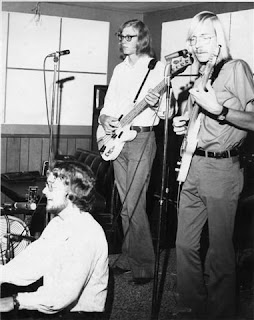
The single most significant outside contribution to this project has come from Bill Owen, who mailed me his first-generation tapes of Bent Fender & the Moonglows. This has not only enabled me to upgrade previous posts, but it has brought to light a series of forgotten events. In the autumn of 1972, I rejoined the Shade Tree Boys, Hal and Henry, who were now playing at the Black Garter. Henry had a job selling tires at Sears & Roebuck, and often showed up late or not at all. He finally quit the group, and Hal moved me from bass to electric guitar, hired Ross Swall to play bass, and returned to a quasi-country repertoire. Always quick with a quip, Hal off-handedly dubbed this aggregation "the Shade Trio." Long-time followers of the band missed the comedy routine, but I knew it by heart (having heard it a hundred times) and soon Hal had me doing Henry's x-rated "village idiot" shtick. Meanwhile, the club hired a new waitress named Cleo Bell Thompson. When Hal discovered she was a singer of some merit, he began showcasing her as "Foxy Thompson." Besides the Black Garter gig, we also played at the Red Rose Lounge and at service clubs at Fort Bliss and White Sands. In 1973, Hal chucked it all and went to California to re-connect with one of the loves of his life. Ross also left the group, and Cleo and I teamed up with Bill Owen to play the army jobs Hal had booked before he left. Cleo named us "Peaches 'n' Cream," which I hated, but it was a transitional situation: she soon joined forces with Charlie McDonald to form Applejack, and Bill and Tony Custer and I started Bent Fender & the Moonglows. Soon we were playing six nights a week: three at the Jade Club and three at the King's X (where we played on Long John Hunter's nights off). We were an identity crisis band -- for the audience. We did Fats Domino and Ernest Tubb, John Denver and Rolling Stones, Elton John and Barbershop, Eagles and Elvis. We drank -- for free -- as though our lives didn't depend on it, and after months of doing filthy comedy, I was one smart-ass front man. One night after we got through playing at the King's X, I discovered somebody had slashed all four of my tires. I never found out who or why. BF & the MG's were history by the end of the year -- Bill and Tony had careers to prepare for, and I went back to playing sideman for local country singers. The three of us are in contact, and once in awhile some of us see each other. Listening to these tapes 35 years after the fact, I take quiet pride in having been involved in this unique, eclectic little band. Perhaps not many people know who we were or what we did, but we do.
Tony Custer: piano & vocal
Zoomer Roberts: guitar & vocal
Bill Owen: bass
recorded June 1973 at the King's X

The single most significant outside contribution to this project has come from Bill Owen, who mailed me his first-generation tapes of Bent Fender & the Moonglows. This has not only enabled me to upgrade previous posts, but it has brought to light a series of forgotten events. In the autumn of 1972, I rejoined the Shade Tree Boys, Hal and Henry, who were now playing at the Black Garter. Henry had a job selling tires at Sears & Roebuck, and often showed up late or not at all. He finally quit the group, and Hal moved me from bass to electric guitar, hired Ross Swall to play bass, and returned to a quasi-country repertoire. Always quick with a quip, Hal off-handedly dubbed this aggregation "the Shade Trio." Long-time followers of the band missed the comedy routine, but I knew it by heart (having heard it a hundred times) and soon Hal had me doing Henry's x-rated "village idiot" shtick. Meanwhile, the club hired a new waitress named Cleo Bell Thompson. When Hal discovered she was a singer of some merit, he began showcasing her as "Foxy Thompson." Besides the Black Garter gig, we also played at the Red Rose Lounge and at service clubs at Fort Bliss and White Sands. In 1973, Hal chucked it all and went to California to re-connect with one of the loves of his life. Ross also left the group, and Cleo and I teamed up with Bill Owen to play the army jobs Hal had booked before he left. Cleo named us "Peaches 'n' Cream," which I hated, but it was a transitional situation: she soon joined forces with Charlie McDonald to form Applejack, and Bill and Tony Custer and I started Bent Fender & the Moonglows. Soon we were playing six nights a week: three at the Jade Club and three at the King's X (where we played on Long John Hunter's nights off). We were an identity crisis band -- for the audience. We did Fats Domino and Ernest Tubb, John Denver and Rolling Stones, Elton John and Barbershop, Eagles and Elvis. We drank -- for free -- as though our lives didn't depend on it, and after months of doing filthy comedy, I was one smart-ass front man. One night after we got through playing at the King's X, I discovered somebody had slashed all four of my tires. I never found out who or why. BF & the MG's were history by the end of the year -- Bill and Tony had careers to prepare for, and I went back to playing sideman for local country singers. The three of us are in contact, and once in awhile some of us see each other. Listening to these tapes 35 years after the fact, I take quiet pride in having been involved in this unique, eclectic little band. Perhaps not many people know who we were or what we did, but we do.
Heart of My Heart
Bent Fender & the Moonglows
Tony Custer: piano & vocal
Zoomer Roberts: guitar
Bill Owen: bass
recorded 1973 at Kallman Service Club, Ft. Bliss TX
Tony was playing piano at Shakey's Pizza Parlor when we first met him. The place had an early 20th century motif, with vintage signage, silent movies, and Tony doing old Nora Bayes songs. One of their promotions was awarding a pitcher of beer to the customer bold enough to get up and sing some old chestnut, and Bill would tell me to "go win us that beer!" I was happy to oblige. "Heart of My Heart" was my favorite of Tony's barber shop numbers, and we kept it in our repertoire for the duration.
Tony Custer: piano & vocal
Zoomer Roberts: guitar
Bill Owen: bass
recorded 1973 at Kallman Service Club, Ft. Bliss TX
Tony was playing piano at Shakey's Pizza Parlor when we first met him. The place had an early 20th century motif, with vintage signage, silent movies, and Tony doing old Nora Bayes songs. One of their promotions was awarding a pitcher of beer to the customer bold enough to get up and sing some old chestnut, and Bill would tell me to "go win us that beer!" I was happy to oblige. "Heart of My Heart" was my favorite of Tony's barber shop numbers, and we kept it in our repertoire for the duration.
Break-Up
Bent Fender & the Moonglows
Zoomer Roberts: guitar & vocal
Tony Custer: piano
Bill Owen: bass
recorded June 1973 at the King's X
When you're working with a good pianist, it's only natural to start thinking of Jerry Lee Lewis songs you can do. We learned this one from one of the many reissues of the Killer's Sun recordings that flooded the market in those days. We were probably the only people in the bar that night who were interested in it.
Zoomer Roberts: guitar & vocal
Tony Custer: piano
Bill Owen: bass
recorded June 1973 at the King's X
When you're working with a good pianist, it's only natural to start thinking of Jerry Lee Lewis songs you can do. We learned this one from one of the many reissues of the Killer's Sun recordings that flooded the market in those days. We were probably the only people in the bar that night who were interested in it.
It Takes A Lot to Laugh, It Takes A Train to Cry
Bent Fender & the Moonglows
Zoomer Roberts: vocal, harmonica, guitar
Tony Custer: piano
Bill Owen: bass
recorded June 1973 at the King's X
This arrangement was lifted directly from the Concert for Bangla Desh album. Bob Dylan rarely performed live in the years between his 1966 and 1974 tours (he was at home raising kids), so it was revelatory when he emerged for a day and performed six of his classic songs with a fresh voice, accompanied by his own acoustic guitar, Leon Russell and two members of the Beatles. I committed every nuance of that set to memory. Today, it's not unusual for Bob to be playing in your town, and everybody knows he doesn't sound like his old records -- and doesn't want to. But in those long ago days, it was a bolt from the blue.
Zoomer Roberts: vocal, harmonica, guitar
Tony Custer: piano
Bill Owen: bass
recorded June 1973 at the King's X
This arrangement was lifted directly from the Concert for Bangla Desh album. Bob Dylan rarely performed live in the years between his 1966 and 1974 tours (he was at home raising kids), so it was revelatory when he emerged for a day and performed six of his classic songs with a fresh voice, accompanied by his own acoustic guitar, Leon Russell and two members of the Beatles. I committed every nuance of that set to memory. Today, it's not unusual for Bob to be playing in your town, and everybody knows he doesn't sound like his old records -- and doesn't want to. But in those long ago days, it was a bolt from the blue.
Wednesday, April 16, 2008
Men With Broken Hearts
Zoomer Roberts: recitation
Buddy Winston: guitar
I wanted to include a "Luke the Drifter" recitation in the 2003 Hank Williams tribute show. There are more than a dozen such items to choose from, and I was pretty sure that none of the other participants in the program would be doing one. Recitations are easy to do badly, and difficult to do well enough to not elicit derisive jeers. They tend to be preachy -- and depressing -- but I love them. "Men With Broken Hearts" is a masterpiece of the genre, and its message is as relevant now as it was when Hank recorded it in 1950.
Buddy Winston: guitar
I wanted to include a "Luke the Drifter" recitation in the 2003 Hank Williams tribute show. There are more than a dozen such items to choose from, and I was pretty sure that none of the other participants in the program would be doing one. Recitations are easy to do badly, and difficult to do well enough to not elicit derisive jeers. They tend to be preachy -- and depressing -- but I love them. "Men With Broken Hearts" is a masterpiece of the genre, and its message is as relevant now as it was when Hank recorded it in 1950.
Tuesday, April 15, 2008
Whiskey and the Wheel
The Applejack Band
Charlie McDonald: lead vocal, rhythm guitar
Buddy Winston: lead guitar, vocal
Zoomer Roberts: bass, vocal
recorded c. October, 1989 at KTEP Studio B, Cotton Memorial Building, University of Texas at El Paso
Charlie McDonald: lead vocal, rhythm guitar
Buddy Winston: lead guitar, vocal
Zoomer Roberts: bass, vocal
recorded c. October, 1989 at KTEP Studio B, Cotton Memorial Building, University of Texas at El Paso
Charlie McDonald wrote this song, and it is -- literally -- "a medley of our hit." It was recorded circa 1977 in Las Cruces and issued on Emmett Brooks' Gold Dust label. Although neither Buddy nor I were officially members of Applejack when it was recorded, we both played on the session, along with core members John Ruddock and Cleo Bell and studio drummer Jake Brooks. The record did sufficient business to be leased and re-issued on the Teardrop label out of San Antonio, which resulted in wider distribution. Ultimately, the song hit #1 in Billings, Montana. Not bad!
Gold Watch and Chain
The Applejack Band
Zoomer Roberts: lead vocal, bass
Charlie McDonald: rhythm guitar, vocal
Buddy Winston: lead guitar, vocal
recorded c. October, 1989 at KTEP Studio B, Cotton Memorial Building, University of Texas at El Paso
I first became aware of this Carter Family song when I saw Alisa Jones sing it on a Grand Ole Opry telecast in 1979. It was the most pitiful, heart-wrenching thing I'd ever heard. It haunted me for some time, and I searched high and low for a copy of it (a task in the days before the Internet). Finally, it appeared on an Emmylou Harris album, and I've been singing it ever since. Over the years it has become something quite different from Alisa Jones' sad-eyed plea for reconciliation. In the early 1980s, June Carter sang it on the Nashville Network and included a verse that went more or less like this:
There's a white rose that grows in my garden
It has been blooming there for a while
It broke through on the day that I lost you
It will die if I ever should smile
Zoomer Roberts: lead vocal, bass
Charlie McDonald: rhythm guitar, vocal
Buddy Winston: lead guitar, vocal
recorded c. October, 1989 at KTEP Studio B, Cotton Memorial Building, University of Texas at El Paso
I first became aware of this Carter Family song when I saw Alisa Jones sing it on a Grand Ole Opry telecast in 1979. It was the most pitiful, heart-wrenching thing I'd ever heard. It haunted me for some time, and I searched high and low for a copy of it (a task in the days before the Internet). Finally, it appeared on an Emmylou Harris album, and I've been singing it ever since. Over the years it has become something quite different from Alisa Jones' sad-eyed plea for reconciliation. In the early 1980s, June Carter sang it on the Nashville Network and included a verse that went more or less like this:
There's a white rose that grows in my garden
It has been blooming there for a while
It broke through on the day that I lost you
It will die if I ever should smile
Your Sweet and Shining Eyes
The Applejack Band
Buddy Winston: lead vocal, lead guitar
Zoomer Roberts: bass, vocal
Charlie McDonald: rhythm guitar, vocal
recorded c. October, 1989 at KTEP Studio B, Cotton Memorial Building, University of Texas at El Paso
Buddy Winston: lead vocal, lead guitar
Zoomer Roberts: bass, vocal
Charlie McDonald: rhythm guitar, vocal
recorded c. October, 1989 at KTEP Studio B, Cotton Memorial Building, University of Texas at El Paso
I Can't Help But Wonder Where I'm Bound
The Applejack Band
Charlie McDonald: lead vocal, rhythm guitar
Buddy Winston: lead guitar, vocal
Zoomer Roberts: bass, vocal
recorded c. October, 1989 at KTEP Studio B, Cotton Memorial Building, University of Texas at El Paso
Charlie McDonald: lead vocal, rhythm guitar
Buddy Winston: lead guitar, vocal
Zoomer Roberts: bass, vocal
recorded c. October, 1989 at KTEP Studio B, Cotton Memorial Building, University of Texas at El Paso
Early Morning Rain
The Applejack Band
Charlie McDonald: lead vocal, rhythm guitar
Buddy Winston: lead guitar, vocal
Zoomer Roberts: bass, vocal
recorded c. October, 1989 at KTEP Studio B, Cotton Memorial Building, University of Texas at El Paso
Charlie McDonald: lead vocal, rhythm guitar
Buddy Winston: lead guitar, vocal
Zoomer Roberts: bass, vocal
recorded c. October, 1989 at KTEP Studio B, Cotton Memorial Building, University of Texas at El Paso
Titanic (Fare Thee Well)
The Applejack Band
Zoomer Roberts: lead vocal, bass
Buddy Winston: lead guitar, vocal
Charlie McDonald: rhythm guitar, vocal
recorded c. October, 1989 at KTEP Studio B, Cotton Memorial Building, University of Texas at El Paso
I learned this from Tim Green, who just might sing folk songs better than anybody. He learned it from the "Mud Acres" album, which featured Happy & Artie Traum, Maria Muldaur and John Sebastian, among others. They learned it from Leadbelly. The reference to Jack Johnson doing the "Eagle Rock" attests to its antiquity. I had forgotten all about this song until this tape surfaced. That's the way of it sometimes, as one of the hands said to Captain Smith on that long-ago night.

Zoomer Roberts: lead vocal, bass
Buddy Winston: lead guitar, vocal
Charlie McDonald: rhythm guitar, vocal
recorded c. October, 1989 at KTEP Studio B, Cotton Memorial Building, University of Texas at El Paso
I learned this from Tim Green, who just might sing folk songs better than anybody. He learned it from the "Mud Acres" album, which featured Happy & Artie Traum, Maria Muldaur and John Sebastian, among others. They learned it from Leadbelly. The reference to Jack Johnson doing the "Eagle Rock" attests to its antiquity. I had forgotten all about this song until this tape surfaced. That's the way of it sometimes, as one of the hands said to Captain Smith on that long-ago night.

I Would Like To See You Again
The Applejack Band
Zoomer Roberts: lead vocal, bass
Buddy Winston: banjo, vocal
Charlie McDonald: rhythm guitar, vocal
recorded c. October, 1989 at KTEP Studio B, Cotton Memorial Building, University of Texas at El Paso
Zoomer Roberts: lead vocal, bass
Buddy Winston: banjo, vocal
Charlie McDonald: rhythm guitar, vocal
recorded c. October, 1989 at KTEP Studio B, Cotton Memorial Building, University of Texas at El Paso
Friday, April 4, 2008
"Picker of the Year" Award ~ 1982
The El Paso Friends of Folk Music was formed by Charlie McDonald, who ran it as an autocracy until he took to the road with Applejack in 1980. When he gave up the reins, it became a full-blown organization, with officers, committee meetings and politics. Before it collapsed under the weight of its seriousness, it provided El Paso with a fruitful acoustic music scene. "Name" artists were booked for the Border Folk Festival and concerts at the Chamizal Theater. Funds were raised through t-shirt sales, beer concessions, and concerts featuring local performers, who donated their services. These shows had such names as "West Texas Opry" and "Picker's Night," and I played in many of them. At one such event in 1982, I was mingling in the lobby during intermission when Jerry Boyer told me I was needed backstage. I couldn't imagine why. When I saw the "Picker of the Year" award was about to be presented, I assumed Buddy Winston was going to receive it and she wanted me there to congratulate him. I certainly had no expectation of winning it myself: I wasn't the best "picker" in town, and I was openly critical of the bureaucratic way in which the Friends of Folk was run. So, when Charles Harding announced my name, something akin to rigor mortis set in. I had to be pushed onto the stage like a stalled car to accept the honor. The concert was videotaped and shown later on the public access channel, at which time I captured the audio of the presentation.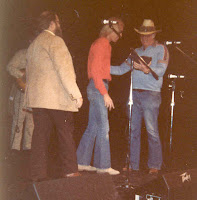
(left to right)
Lee Gaston
Zoomer Roberts
Charles Harding

(left to right)
Lee Gaston
Zoomer Roberts
Charles Harding
Party Doll
performed by Backtrac'n
recorded May 1984 at the Mesa Inn
Bud Sanders: leader
Zoomer Roberts: vocal & lead guitar
"Johnny O." - guitar
Ron Duncan: harmony vocal & electric bass
Bobby Porter: drums
I always liked this Buddy Knox song, as much for the instrumental break as anything else. The subject matter is about as basic as it gets, and if the lyrics were any simpler they'd be a series of grunts. But it's fun to do, and it's got a beat, and you can dance to it, so I give it a "7".
recorded May 1984 at the Mesa Inn

Bud Sanders: leader
Zoomer Roberts: vocal & lead guitar
"Johnny O." - guitar
Ron Duncan: harmony vocal & electric bass
Bobby Porter: drums
I always liked this Buddy Knox song, as much for the instrumental break as anything else. The subject matter is about as basic as it gets, and if the lyrics were any simpler they'd be a series of grunts. But it's fun to do, and it's got a beat, and you can dance to it, so I give it a "7".
Dixie Fried
performed by Backtrac'n
recorded May 1984 at the Mesa Inn
Bud Sanders: leader
Zoomer Roberts: vocal & lead guitar
"Johnny O." - guitar
Ron Duncan: bass
Bobby Porter: drums
Dueling Elvises:
with Bud Sanders
Backtrac'n was a band that Bud Sanders put together to perform the pre-British Invasion rock 'n' roll music he loved. The primary focus was on his renditions of Elvis Presley songs, but he generously shared the spotlight with the rest of the group. I had wanted to do this old Carl Perkins hell-raiser for a long time, and this was the band to do it. My principle memory of this gig was that we were playing for the gate, and nobody thought to station anybody at the door to collect the cover charge until the night was half gone. We each went home that night with $2.00. I left shortly thereafter to permanently rejoin Applejack. I used to kid Bud that he'd have to quit doing Elvis at the age of 42, because that's how old Elvis was when he left the building for the final time. Bud is still around, and still rockin'.
recorded May 1984 at the Mesa Inn
Bud Sanders: leader
Zoomer Roberts: vocal & lead guitar
"Johnny O." - guitar
Ron Duncan: bass
Bobby Porter: drums

Dueling Elvises:
with Bud Sanders
Backtrac'n was a band that Bud Sanders put together to perform the pre-British Invasion rock 'n' roll music he loved. The primary focus was on his renditions of Elvis Presley songs, but he generously shared the spotlight with the rest of the group. I had wanted to do this old Carl Perkins hell-raiser for a long time, and this was the band to do it. My principle memory of this gig was that we were playing for the gate, and nobody thought to station anybody at the door to collect the cover charge until the night was half gone. We each went home that night with $2.00. I left shortly thereafter to permanently rejoin Applejack. I used to kid Bud that he'd have to quit doing Elvis at the age of 42, because that's how old Elvis was when he left the building for the final time. Bud is still around, and still rockin'.
Thursday, April 3, 2008
Fool
The Lariat Cowboys
recorded May 2, 1981
Zoomer Roberts: vocal & guitar
Jimmy Smith: fiddle
Tony Quero: bass
Mark Kays: drums
I might have fared better in the bar band business if I hadn't insisted on doing numbers like this. It had been a modest hit for John Wesley Ryles four years earlier, but nobody recognized it now. It was difficult to sing, too. Within many of us, there is a desire to wail like Ray Charles or Jerry Lee Lewis. This performance makes a good case for suppressing that desire.
recorded May 2, 1981
Zoomer Roberts: vocal & guitar
Jimmy Smith: fiddle
Tony Quero: bass
Mark Kays: drums
I might have fared better in the bar band business if I hadn't insisted on doing numbers like this. It had been a modest hit for John Wesley Ryles four years earlier, but nobody recognized it now. It was difficult to sing, too. Within many of us, there is a desire to wail like Ray Charles or Jerry Lee Lewis. This performance makes a good case for suppressing that desire.
Dixie
The Lariat Cowboys
recorded May 2, 1981
Zoomer Roberts: vocal & guitar
Jimmy Smith: fiddle
Tony Quero: bass
Mark Kays: drums
Southern Rock was loud and exciting, and fired-up patrons often shouted requests for "Dixie" after being sonically sandblasted by the latest Charlie Daniels opus, so we worked it up. I only used the first verse of the song -- subsequent verses deal with such antebellum esoterica as "buckwheat cakes and injun batter," and are best left to students of minstrelsy.
recorded May 2, 1981
Zoomer Roberts: vocal & guitar
Jimmy Smith: fiddle
Tony Quero: bass
Mark Kays: drums
Southern Rock was loud and exciting, and fired-up patrons often shouted requests for "Dixie" after being sonically sandblasted by the latest Charlie Daniels opus, so we worked it up. I only used the first verse of the song -- subsequent verses deal with such antebellum esoterica as "buckwheat cakes and injun batter," and are best left to students of minstrelsy.

Wednesday, April 2, 2008
Blown Up On KLAQ Radio
November 17. 1982
A thousand copies of the "Little Darlin' " single were shipped from the pressing plant to Scott Martin's studio. When I went over there to pick them up, a KLAQ disc jockey who was visiting Scott listened to the record and asked me if he could "blow it up" on his morning show. Feeling sure this was a euphemism for spotlighting or showcasing, I readily agreed. I got up early the next morning and taped the show. The excerpt heard here contains the actual blowing up (not at all what I expected) book-ended by some period ambiance.
A thousand copies of the "Little Darlin' " single were shipped from the pressing plant to Scott Martin's studio. When I went over there to pick them up, a KLAQ disc jockey who was visiting Scott listened to the record and asked me if he could "blow it up" on his morning show. Feeling sure this was a euphemism for spotlighting or showcasing, I readily agreed. I got up early the next morning and taped the show. The excerpt heard here contains the actual blowing up (not at all what I expected) book-ended by some period ambiance.
Tuesday, April 1, 2008
The World Is Waiting For the Sunrise
The Shade Tree Boys
recorded 1969 at the Jade Club
Hal Smith: guitar & vocal
Henry Beebe: banjo & vocal
Zoomer Roberts: bass
I never thought to ask Hal and Henry where they got the idea of doing this as a bluegrass song, but it's a safe bet they took Don Gibson's 1960 version and simply sped it up.
recorded 1969 at the Jade Club
Hal Smith: guitar & vocal
Henry Beebe: banjo & vocal
Zoomer Roberts: bass
I never thought to ask Hal and Henry where they got the idea of doing this as a bluegrass song, but it's a safe bet they took Don Gibson's 1960 version and simply sped it up.
Subscribe to:
Posts (Atom)


